
What usually shortens a roof’s service life?
A roof generally lasts longer when water is moved away quickly, moisture is allowed to escape, and small defects are corrected before they spread. In Dansville, NY, seasonal temperature changes, snow, ice, wind, falling branches, and repeated freeze-thaw cycles can place extra stress on roofing materials.
Roof aging is not caused by one factor alone. Sunlight gradually weakens exposed materials, while trapped moisture can damage roof decking, insulation, rafters, and interior ceilings. Poor attic ventilation, clogged gutters, missing flashing, and delayed repairs often cause more preventable damage than ordinary weathering.
How often should a roof be inspected?
A roof should receive a visual inspection at least twice a year, usually in spring and fall. It should also be checked after a major windstorm, heavy snow event, or nearby tree damage.
A ground-level inspection can reveal several warning signs:
- Missing, cracked, curled, or lifted shingles
- Dark areas that may indicate moisture or algae growth
- Sagging roof lines
- Damaged or loose metal flashing
- Gutters filled with shingle granules
- Exposed underlayment or roof decking
- Debris collecting in valleys or behind roof structures
Walking on a roof is not necessary for a basic seasonal check and can create additional damage, especially when shingles are brittle, wet, icy, or cold. A closer inspection may require appropriate fall protection and should not be attempted in hazardous conditions.
Why are gutters so important to roof longevity?
Gutters and downspouts protect the roof edge, siding, foundation, and soil around the house by directing water away from the structure. If gutters are packed with leaves, twigs, or roof granules, water can back up beneath the lower edge of the roofing or spill against exterior walls.
In a community with mature trees and four distinct seasons, gutter maintenance is often needed more than once a year. Check them after leaves have fallen and again in spring, when winter debris and ice may have shifted sections out of alignment.
Downspouts should discharge water several feet away from the foundation whenever possible. Water that repeatedly pools beside the house can increase basement moisture and may contribute to settlement or ice formation near the roof edge.
How does attic ventilation help a roof last longer?
Balanced attic ventilation reduces heat and moisture buildup beneath the roof. Intake openings near the lower roof edge allow cooler air to enter, while higher vents allow warm, damp air to leave. Both parts of the system need to function properly.
In winter, warm air leaking from the living space into a cold attic can condense on roof components. This moisture may contribute to mold, wood decay, damp insulation, and frost accumulation. In summer, excessive attic heat can accelerate the aging of roofing materials and increase indoor temperatures.
Ventilation does not replace air sealing or insulation. Attic insulation should remain dry and should not block designed airflow at the eaves. Bathroom and kitchen exhaust fans should vent outdoors rather than into the attic, where they can introduce significant moisture.
What should homeowners do about snow and ice?
Snow does not always need to be removed from a roof. Many roofs are designed to carry ordinary snow loads, and unnecessary shoveling can damage shingles or create a fall hazard. Problems become more concerning when snow is unusually deep, drifts are uneven, roof framing shows signs of stress, or water is entering the home.
Ice dams form when heat from the attic melts snow on warmer sections of the roof. The water then refreezes near colder eaves, where it can back up beneath shingles. Proper insulation, air sealing, ventilation, and adequate attic airflow address the underlying causes better than repeatedly removing visible ice.
Warning signs include:
- Icicles accompanied by water stains or peeling paint indoors
- Ice collecting along several roof edges
- Damp insulation near the eaves
- Repeated leaks during thawing weather
- Gutters pulled away from the roof edge
Do not use open flames, sharp tools, or corrosive chemicals to remove ice. These methods can damage roofing and create serious safety risks.
Which roof details deserve the closest attention?
Roof surfaces are only part of the system. Water commonly enters at transitions and penetrations, including chimneys, plumbing vent pipes, skylights, wall intersections, and roof valleys.
Flashing should lie flat and remain securely attached. Sealant can help with limited maintenance needs, but it is not a substitute for properly installed metal flashing or sound roofing materials. Sealants also deteriorate over time from ultraviolet exposure, temperature changes, and movement between materials.
Roof valleys deserve special attention because they collect water and snow from two slopes. Leaves and branches should be cleared carefully so water can flow freely. If a valley shows exposed underlayment, lifted shingles, rusted metal, or repeated staining below, it should be treated as a priority area.
Can moss and algae damage a roof?
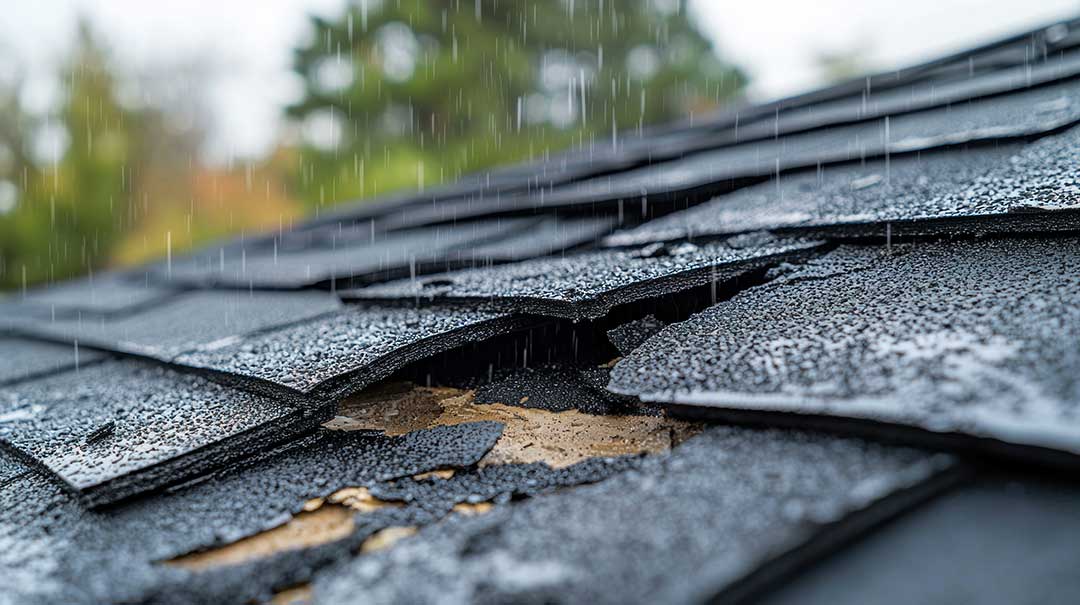
Moss can shorten roof life by holding moisture against shingles and lifting their edges. It is more likely to appear on shaded roof slopes or areas where leaves remain damp. Algae may create dark streaks without causing the same physical damage as moss, but both conditions can signal poor drying.
Avoid pressure washing a shingle roof. The force can remove protective granules and drive water beneath the roofing. Aggressive scraping can also break or lift shingles.
Keeping nearby branches trimmed can improve sunlight and airflow. Any treatment should be compatible with the roofing material and applied according to its directions. Copper or zinc strips may limit future growth in some situations, but they do not correct drainage or ventilation problems.
What repairs should not be delayed?
Small defects can become expensive when water reaches the roof deck or wall framing. Repairs deserve prompt attention when there are active leaks, missing shingles, exposed wood, damaged flashing, sagging areas, or signs that roofing material has shifted.
Interior clues include:
- Brown or yellow ceiling stains
- Damp attic insulation
- Musty odors
- Peeling paint near upper walls
- Drips that appear only during thawing or wind-driven rain
A leak does not always appear directly below its entry point. Water can travel along rafters, roof decking, insulation, and wall cavities before becoming visible indoors. A dry ceiling does not prove that a suspected roof defect is harmless.
Which maintenance habits provide the greatest benefit?
The most useful maintenance plan is consistent rather than complicated:
- Keep gutters and downspouts clear.
- Remove leaves and branches from valleys and roof surfaces.
- Inspect flashing and roof penetrations each spring and fall.
- Keep tree limbs from rubbing against the roof.
- Maintain attic insulation, air sealing, and ventilation.
- Check for loose exterior materials after strong winds.
- Document leaks, repairs, and inspection dates.
- Avoid walking on the roof unless proper equipment and conditions are available.
Roofing materials have different maintenance needs, so manufacturer guidance and the roof’s age should be considered. Safety and building-code concerns require qualified assistance, particularly when work involves steep slopes, electrical hazards, structural damage, or winter conditions.
A roof that stays dry, drains well, and receives timely attention generally has a better chance of reaching its expected service life.
