
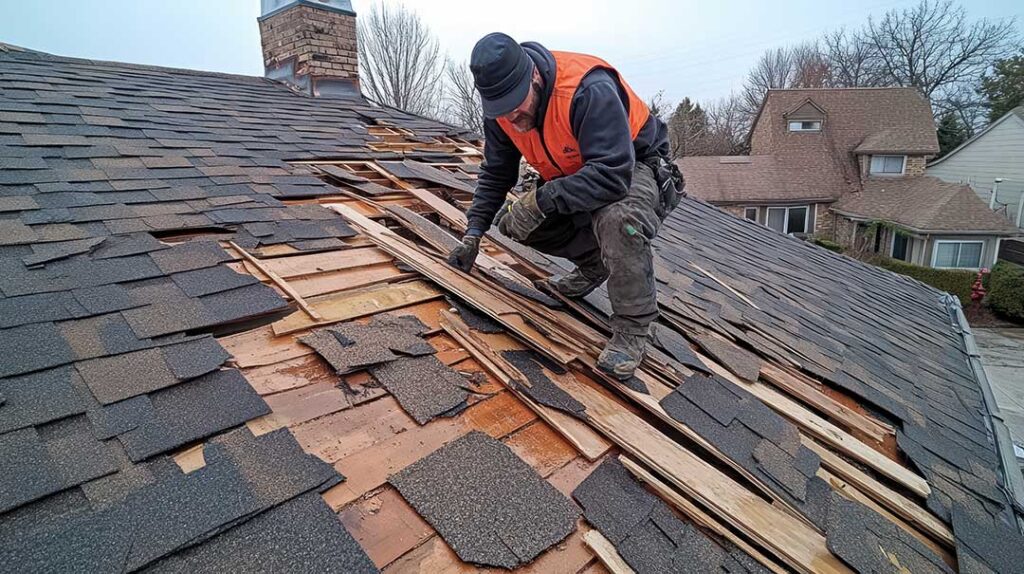
What can homeowners safely do to maintain a roof?
Most routine roof maintenance involves observation, cleaning from the ground, and keeping water-drainage systems clear. Homeowners can often identify early warning signs without climbing onto the roof, but walking on shingles or working near steep edges creates unnecessary risk.
In Dansville, NY, roofs commonly face changing conditions throughout the year: winter snow and ice, spring rain, summer heat, falling leaves, and occasional strong wind. These seasonal changes can expose small weaknesses that may become more serious if they are overlooked.
A practical maintenance routine includes:
- Inspecting the roof from the ground several times a year
- Clearing leaves and debris from gutters and downspouts
- Checking attic spaces for moisture or daylight
- Trimming branches that may scrape the roof
- Looking for missing, cracked, curled, or loose shingles
- Reviewing roof and drainage conditions after major storms
The goal is not to make a roof last forever. It is to notice manageable problems before water reaches insulation, ceilings, walls, or framing.
How often should a roof be checked?
A roof should receive a basic visual check at least twice a year, usually in spring and fall. Additional inspections are useful after high winds, heavy snowfall, ice buildup, or a storm that leaves branches and debris around the property.
A ground-level inspection can reveal:
- Shingles scattered in the yard or caught in gutters
- Dark patches or areas that appear uneven
- Exposed underlayment or roof decking
- Damaged metal around chimneys, vents, and other openings
- Sagging lines along the roof surface
- Moss or algae growth that is spreading across shingles
- Granules collecting in gutters or at the base of downspouts
Binoculars can make a ground inspection more useful. Look from several angles because damage may be visible from one side of the house but hidden from another.
Do not assume a roof is undamaged simply because there is no ceiling stain. Water can travel along rafters and insulation before appearing indoors.
Should homeowners climb onto the roof?
For most maintenance tasks, no. A roof can be slippery even when it looks dry, and frost, dew, moss, loose granules, or steep slopes can make footing unpredictable. Snow and ice add substantial danger and should never be treated as ordinary walking conditions.
Avoid climbing onto a roof when:
- The surface is wet, icy, snowy, or covered with moss
- The roof has a steep pitch
- Ladders cannot be placed on stable, level ground
- Electrical wires are nearby
- Wind is strong
- The work requires reaching over an edge
- There is no safe way to maintain three points of contact
Roof access may be necessary for certain repairs, but it is not a normal requirement for seasonal observation. If a concern involves structural sagging, active leaking, unstable materials, or unsafe access, the situation should be evaluated by someone qualified to work safely at height.
How should gutters and downspouts be maintained?
Gutters and downspouts should move water away from the roof and foundation. They need attention in spring and after leaves fall, particularly on properties surrounded by mature trees.
Before cleaning, place a stable ladder on firm ground and keep the ladder away from overhead electrical lines. Do not lean sideways from the ladder. A ladder stabilizer or another safe access method may be appropriate, but improvised supports such as stacked boxes or loose boards are not.
Remove leaves and sediment by hand while wearing gloves, then flush the gutter with a hose if conditions are safe. Check whether water flows freely through each downspout. A blocked downspout can cause water to overflow against siding, windows, foundations, and lower roof edges.
Also check that:
- Gutters are securely attached
- Sections are not separating at their joints
- Downspouts discharge several feet away from the foundation when possible
- Water is not pooling beside the house
- The soil below the downspout is not washing away
Heavy ice formation can pull on gutters and loosen fasteners. Do not use sharp tools or forceful chopping to break ice from a roof edge, since that can damage shingles, flashing, and the gutter itself.
What should be checked from inside the attic?
The attic can reveal roof problems before damage becomes visible in finished rooms. On a dry day, use a flashlight to examine the underside of the roof deck, rafters, insulation, and areas around vents or chimneys.
Look for:
- Damp or compressed insulation
- Brown or dark water marks
- Mold-like growth
- Rusted nails
- Drips or active moisture
- Daylight showing through the roof deck
- Frost or excessive condensation in cold weather
Not every attic stain indicates a current leak. Some marks come from an older problem or condensation. However, fresh dampness, a musty odor, or repeated staining deserves attention.
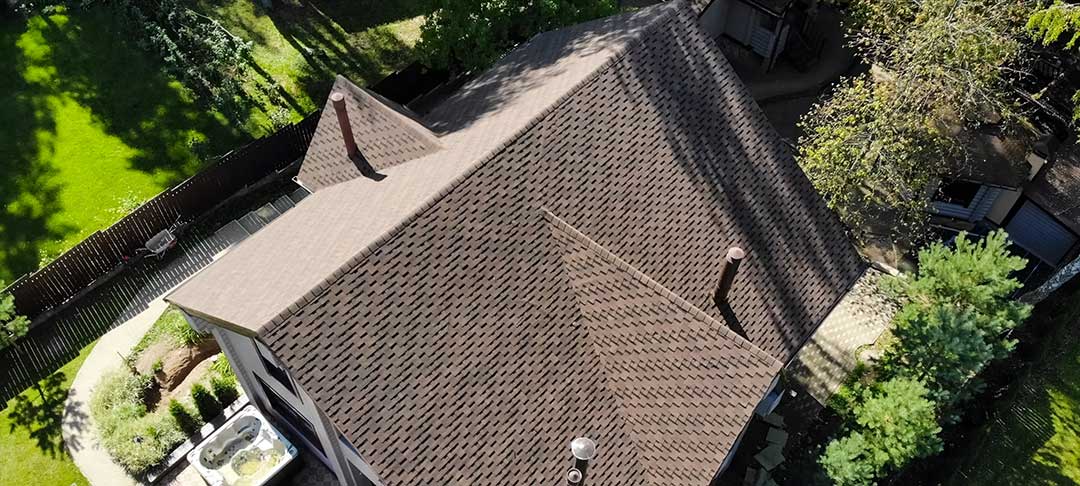
Adequate attic ventilation and insulation also matter. Warm, moist air from the living space can move into a cold attic and condense on roof materials. Bathroom fans should vent outdoors rather than into the attic, and attic access panels should fit reasonably well to limit warm air leakage.
How can trees and branches damage a roof?
Branches can scrape away protective granules, break shingles, block gutters, and provide a path for rodents or other animals to reach roof edges. During wet snow or strong wind, branches that appear harmless can bend or break onto the roof.
Keep an eye on limbs that:
- Touch or repeatedly rub against shingles
- Hang directly over the roof
- Are dead, split, or heavily decayed
- Obstruct gutters or valleys
- Could fall onto the house during a storm
Tree work near a roof, utility line, or large overhead limb can be hazardous. Do not attempt to cut a heavy or unstable branch from a ladder. The risk is not limited to falling wood; a shifting branch can pull a person off balance or damage the roof unexpectedly.
Are moss, algae, and roof stains serious problems?
Moss and algae do not always mean a roof is failing, but they should not be ignored. Moss can hold moisture against shingles and may lift their edges as it grows. Dark streaks may be algae-related staining rather than structural damage, although widespread growth can make inspection more difficult.
Avoid pressure washing shingles. High-pressure water can remove granules and force water beneath roofing materials. Scraping growth aggressively can also loosen shingles.
For minor growth visible from a safe location, gentle cleaning methods designed for roofing materials are less damaging than harsh tools. Never mix cleaning chemicals, and protect plants, siding, and metal surfaces from runoff. If growth is extensive or located on a steep roof, the work may not be suitable for a homeowner.
What should be done after a storm?
After strong wind, hail, or heavy snow, inspect the yard and roof edges from the ground. Look for missing shingles, exposed fasteners, dented metal, fallen branches, and pieces of roofing material.
Inside the home, check ceilings, attic areas, and upper walls for new stains or dampness. Place a container under an active drip if necessary, but do not climb into a wet attic or attempt electrical repairs near water.
Emergency conditions include:
- A large section of roof covering has blown away
- The roof deck is visibly sagging
- Water is entering near electrical equipment
- A tree has struck the roof
- Snow or ice has shifted dangerously above an entrance
- A ceiling is bulging from trapped water
These situations involve more than routine maintenance. Keep people away from the affected area and arrange for safe assessment, especially when structural damage or electrical hazards may be present.
Which roof maintenance mistakes are most common?
Several well-intended actions can create additional damage:
- Using a pressure washer on shingles
- Walking on fragile or cold roofing materials
- Applying roofing cement over every visible stain
- Blocking attic vents to reduce winter drafts
- Ignoring small leaks because they stop during dry weather
- Cleaning gutters while standing on an unstable ladder
- Removing snow with a sharp shovel or metal tool
- Assuming all dark roof streaks are mold
A roof lasts longer when water is directed away from the building, ventilation is functioning, and small changes are investigated before they spread. For local households, a few careful checks during spring thaw, autumn leaf fall, and post-storm cleanup can provide useful information without turning routine maintenance into a hazardous project.
